A new Sustainable Biosecurity Funding Advisory Panel will for the first-time boost transparency for farmers and importers by giving them a say on biosecurity priorities and showing how Commonwealth biosecurity funding is used, the government has said.
The Federal Government’s record $1 billion Sustainable Biosecurity Funding model – including increased funding from government, importers and producers – secures long-term, permanent biosecurity funding for the first time in Australian history, the government said.
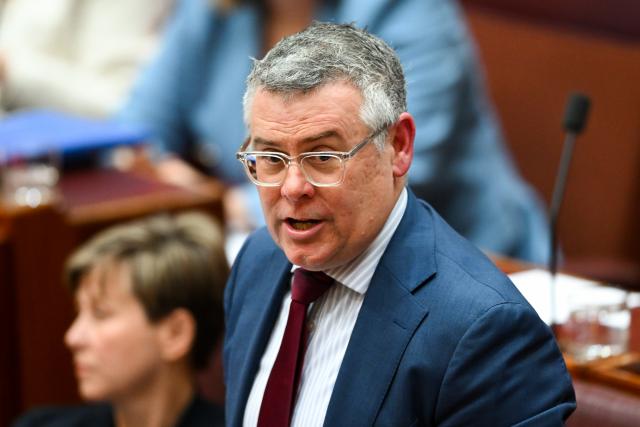
Minister for Agriculture, Fisheries and Forestry Murray Watt said the government continued to listen carefully to feedback on implementation of the Sustainable Biosecurity Funding model.
“I am determined to ensure that we implement a fair, equitable and transparent model for biosecurity funding in Australia,” Minister Watt said.
“Industry have said loud and clear that they want more say in how we use biosecurity funds, and the Albanese Government has listened.
“Given they have so much at stake, I also want industry to contribute to our biosecurity priorities more directly.
“The Sustainable Biosecurity Funding Advisory Panel will allow the government to meet regularly with those who have a stake in our strong biosecurity protections, show them what we are doing and allow them to input to future priorities.
“Already, based on extensive consultation with industry, we have adjusted the Biosecurity Protection Levy design to apply it more fairly and proportionally to all.
“Another key piece of feedback was that industry expect more transparency of where biosecurity funding is being spent and want input into future biosecurity priorities.”
Minister Watt said membership of the Advisory Panel was drawn from major agriculture, fisheries and forestry sectors, importers and research organisations.
“The Advisory Panel will meet three times a year to provide transparency of biosecurity expenditure and give farmers and importers input into biosecurity priorities.
“We will be clear about what revenue is being raised from producers and importers, along with other components of the Sustainable Biosecurity Funding model, and how that money is being invested.
“The government will work with the Advisory Panel to ensure that biosecurity priorities identified by industry are clearly understood and acted upon.”
Under the Sustainable Biosecurity Funding model, when fully implemented from 1 July 2024, importers will pay 48 per cent of our biosecurity costs, taxpayers will contribute 44 per cent, producers 6 per cent and Australia Post 2 per cent.
“By doing the right thing and making importers pay their fair share for the first time since 2015, we have already raised $235 million from importers since 1 July 2023,” the government said.
“That money strengthens our biosecurity system, protecting agriculture and the community from harmful pests and diseases that threaten trade and our way of life,” Minister Watt said.
The cost of the BPL is around 0.05 per cent of the total value of agriculture, fisheries and forestry production, equivalent to 5 cents for every 100 dollars created in the industry.
In any given week, farmgate prices move by much larger magnitudes than the impact of the Biosecurity Protection Levy, the government said.
Over the past two years, the average weekly movement in:
Lamb prices was 3.0% (National Trade Lamb Indicator)
Cattle prices was 2.6% (Eastern Young Cattle Indicator)
Wheat prices was 2.8% (US no. 2 hard red winter wheat)
“This means that the average weekly farmgate price movement for these commodities was 50 to 60 times the expected impact of the Biosecurity Protection Levy,” the government said.
“These price fluctuations move the value of the agriculture sector by considerably more each week than the overall cost of the annual levy amount.
“In terms of retail food prices, the effect would be smaller still, as only around a quarter of the final retail price is driven by the producer price.”
Minister Watt added: “The small cost is far outweighed by the significant and lasting benefits producers gain from stronger biosecurity prevention arrangements and high international prices.”
“The worst outcome for Australians, as consumers, and as primary producers, would be a significant biosecurity incursion.
“This would have far-reaching and national impacts, including on cost of living, as food production would be reduced, prices would increase, supply chains would be severely disrupted, and jobs would be lost.
“An incursion would likely have a significant impact on industry through production or market losses, clean-up and recovery costs and potential ongoing changes to export conditions if a new pest and disease established in Australia.
“While we cannot guarantee there will be no future outbreaks, collective effort and the Albanese Government’s Sustainable Biosecurity Funding model will ensure we have a strong and dynamic biosecurity system with the highest capability to resist and defend against incursions.
“This is critical to Australia’s future prosperity.”
Organisations invited to be on the Sustainable Biosecurity Funding Advisory Panel:
National Farmers Federation
GrainGrowers Limited
Grain Producers Australia
Cattle Australia
Australian Dairy Farmers
Australian Fresh Produce Alliance
Sheep Producers Australia
Australian Grape and Wine
Seafood Industry Australia
WoolProducers Australia
Cotton Australia
CaneGrowers
Australian Pork Limited
National Farmers Federation Horticulture Council
Plant Health Australia Industry Forum
Animal Health Australia Industry Forum
Australian Forest Products Association
Freight and Trade Alliance
International Forwarders and Customs Brokers Association
Invasive Species Council
Centre of Excellence for Biosecurity Risk Analysis
Commonwealth Scientific and Industrial Research Organisation